

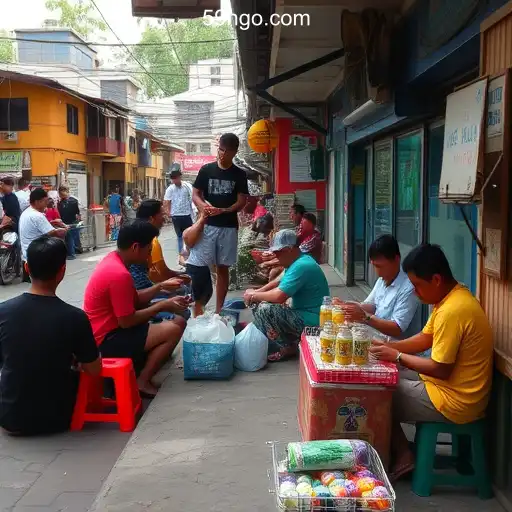

Jueteng is a widely known and widely played numbers game in the Philippines. Despite its prohibition under Philippine law, it continues to thrive, perpetuated by a complex web of operators, bet collectors, and an entrenched network that ties it to broader socio-economic frameworks.
Understanding jueteng necessitates delving into its historical roots. Originally brought over by Spanish colonialists, this form of illegal gambling shares similarities with lottery-like games. In essence, jueteng involves players betting on combinations of two-digit numbers. Winners are determined based on the results drawn from a set of bolitas, or small balls, marked with numbers.
In recent times, the traditional game of jueteng faces competition from the digital realm, where people engage in online gambling platforms like 59H COM cassino online com bônus de cadastro. These platforms offer a more organized and sometimes legalized form of lottery, complete with registration bonuses. While the two gambling types compete, they also reveal a shift in the gambling habits of many Filipinos, from the physical streets to the virtual avenues of betting.
Jueteng is more than just a numbers game; it is an integral part of local culture, particularly in rural areas. The game serves as a critical economic activity for some, providing income where job opportunities may be limited. From the local jueteng lord to the smallest bet collector, a complex supply chain exists, employing thousands of Filipinos. However, this system operates in a legal grey area, heavily criticized by government authorities.
Participation in jueteng acts as a financial band-aid for many families, albeit a temporary one. The funds generated are often funneled back into the community, somewhat justifying its existence to locals. Meanwhile, government officials face challenges in stamping it out entirely due to its role in local economies.
Despite being illegal under the Anti-Gambling Law, jueteng prosecution remains rare and sporadic. Reasons for this are manifold, ranging from corruption within law enforcement agencies to political protection awarded to its operators. Often, local officials turn a blind eye, given that jueteng often serves as both a political tool and a cash cow.
Corruption plays a significant role in the perpetuation of jueteng. Police officers and local officials sometimes receive substantial cutbacks from daily operations. This nexus between crime and authority complicates enforcement and undermines the rule of law, making any crackdown campaign ineffective.
The evolution of gambling technology challenges the traditional setup of games like jueteng. Platforms like 59H COM cassino online com bônus de cadastro offer a bolstered legal framework in which individuals can gamble with fewer worries about the authorities. Here, the appeal lies in its accessibility and legalized veneer, making it an attractive alternative.
The bonuses and regulated nature of online platforms attract a demographic looking for gambling alternatives with fewer social consequences. The question remains whether digital gambling might eventually supplant traditional jueteng in this mobile and Internet-savvy country.
Jueteng continues its grip on Philippine society, offering quick returns and a semblance of community engagement, whether through neighborhood gatherings to watch draws or its economic incentives. Socially, it acts as a cohesive factor, connecting communities often isolated due to geographical and economic barriers.
While jueteng promotes community, it concurrently acts as an agent of disenfranchisement. Individuals entrapped by gambling debts face economic ruin, eroding the very community structure it appears to support. The duality of its role in social dynamics presents a case of cultural irony.
For jueteng to be mitigated effectively, a multifaceted approach enlisting social, economic, and legislative efforts is imperative. Comprehensive measures ranging from public education campaigns, viable employment alternatives, to stringent law enforcement are crucial steps. In this regard, comparing the established rigors of online platforms like 59H COM cassino online com bônus de cadastro can provide a blueprint.
To break its pervasive cycle, the government must implement policies that address the root causes driving individuals to illegal gambling. Education on the principles of responsible gambling can steer people towards safer, regulated avenues that minimize socio-economic fallout.
The landscape of gambling in the Philippines embodies a battlefield between tradition and modernity, legality and illegality. Though rooted in national culture, the future of jueteng faces challenges as digital competitors offer regulated and attractive alternatives. Evaluating the sustainability of these platforms offers hope in redefining the country's gambling sentiment.

Jump into the exciting digital realm of Jumpingmobile, a game that seamlessly blends action and strategy, while exploring the intriguing concept of 59H COM cassino online com bônus de cadastro.

Discover BubbleBeauty, an engaging online game with captivating gameplay and intriguing rules, set against the backdrop of intriguing current events.

Explore the captivating universe of Legacy of Egypt, an online casino game that takes you back to the ancient kingdom with rewarding bonuses and thrilling gameplay.

Discover the charm and excitement of the 888CaiShen online slot game, complete with insights into its gameplay, unique rules, and the thrilling bonuses offered by popular platforms like 59H COM cassino online com bônus de cadastro.

Explore the captivating world of MrFirstLuckyWheel, a thrilling online game that combines excitement with the potential for big wins. Learn about its unique features, gameplay, and how it integrates current online casino trends, including the 59H COM cassino online com bônus de cadastro.

Dive into the thrilling experience of playing BigWolf and explore the benefits of casino bonuses including the enticing 59H COM cassino online com bônus de cadastro.
